Agricultural Engineering
Engineering put to work on farming and food production — equipment, irrigation, and food systems.
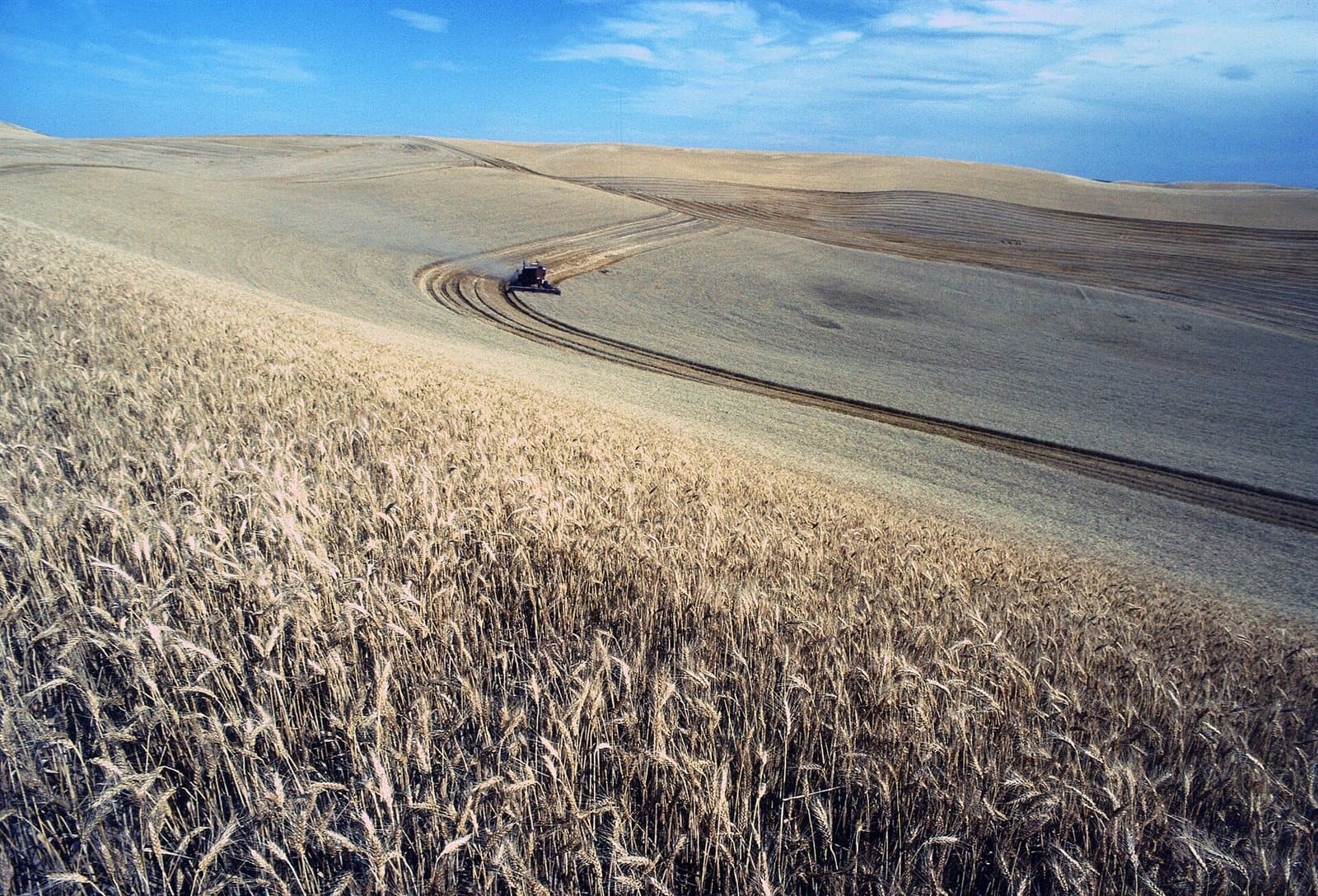
FIG. 01 — AGRICULTURAL ENGINEERING
What It Is
Agricultural engineering applies engineering principles to farming and food production — designing equipment, irrigation systems, and structures that make agriculture more efficient, and adapting technology to work with biological and environmental factors that don't behave like standard engineering materials.
What Engineers Work On
Agricultural engineers design farm equipment and machinery, develop irrigation and water management systems, design structures like storage facilities and processing plants, and work on precision agriculture technology like sensor-based crop monitoring. A lot of the work involves adapting standard engineering solutions to work with biological systems — crops, soil, and livestock — that behave less predictably than typical engineering materials.
Real-World Examples
- Farm equipment and machinery design
- Irrigation and water management systems
- Food processing and storage systems
- Precision agriculture technology, like sensor-based crop monitoring
Common Misconceptions
Tap a card to see the reality behind each one.
Myth: Agricultural engineers are the same as farmers.
Reality: Farmers grow crops and raise livestock; agricultural engineers design the equipment, systems, and technology that support that work.
Myth: The job is only relevant in rural areas.
Reality: While a lot of fieldwork happens on farms, agricultural engineers also work in food processing plants, research labs, and equipment manufacturing companies that can be based almost anywhere.
Myth: It's a low-tech field.
Reality: Modern agricultural engineering involves real technology, including sensors, automation, and data analysis for precision agriculture.
A Day in the Life
Design and testing work is often split between an office or lab and time at a farm or field site where equipment and systems are actually used. Collaboration with farmers, agronomists, and food scientists is a regular part of the job, since real-world agricultural conditions constantly inform the engineering.
One illustrative example day, not a guaranteed schedule — real days vary a lot by employer, role, and industry.
Field visit
Visiting a farm site to see how a piece of equipment or irrigation system is performing in real conditions.
Visiting a farm site to see how a piece of equipment or irrigation system is performing in real conditions.
Reviewing sensor data from a precision agriculture system to check crop or soil conditions.
Working on a design for a new or improved piece of farm equipment.
Meeting with a farmer or agronomist to understand a real problem the design needs to solve.
Testing a prototype under conditions that mimic real farm use.
Documenting today's test results and planning next steps.
Would you enjoy engineering work where the 'materials' you're designing around — soil, crops, weather — don't behave as predictably as steel or plastic?
Typical Projects
- Designing or improving a piece of farm equipment, like a planting or harvesting machine
- Designing an irrigation system for a specific crop and climate
- Testing sensor-based technology for monitoring crop health or soil conditions
- Designing a storage or processing facility to reduce food waste after harvest
Getting Ready
Useful Subjects
- Biology
- Physics
- Chemistry
- Calculus
Helpful Skills
- Comfort combining engineering fundamentals with biology and environmental science
- Practical, hands-on problem-solving, since equipment often has to work reliably in unpredictable outdoor conditions
- Systems thinking, since agricultural systems involve interacting biological, mechanical, and environmental factors
- Willingness to spend time at farm or field sites, not just in an office or lab
Where This Field Shows Up
Industries
- Farm equipment manufacturing
- Food processing
- Irrigation and water management
- Agricultural technology (AgTech)
- Government agricultural agencies
Related Majors
- Agricultural Engineering
- Mechanical Engineering (some overlap)
- Environmental Engineering (some overlap)
Career Explorer
Farm Equipment Design Engineer
Designs and improves machinery used for planting, harvesting, and other farm tasks.
Irrigation Engineer
Designs water management and irrigation systems tailored to specific crops and climates.
Food Processing Engineer
Designs the equipment and systems used to process, package, and store food after harvest.
Precision Agriculture Engineer
Develops sensor-based and data-driven technology to help farmers make more informed decisions.
Weighing It Up
Advantages
- Work directly supports food production, which is an essential need everywhere
- A genuinely interdisciplinary field that blends engineering with biology and environmental science
- Steady, real-world impact — improvements in this field can meaningfully reduce waste or improve yields
Challenges
- Equipment has to perform reliably in unpredictable outdoor conditions, which is harder to design for than a controlled environment
- The field is smaller than many other engineering disciplines, which can mean fewer job openings overall
- Some roles require regular travel to or time at rural farm sites, which isn't for everyone
Things People Dislike
- A relatively small number of job openings compared to larger engineering fields
- Outdoor field work can mean exposure to weather and less comfortable working conditions
- Pay tends to be somewhat lower than many other engineering specialties
How Competitive Is It?
The U.S. Bureau of Labor Statistics projects 7% employment growth for agricultural engineers from 2025 to 2035 — faster than the average for all occupations — with about 100 openings projected per year over that decade. That's one of the smaller annual opening counts among engineering fields on this site, since agricultural engineering is a comparatively small, specialized field. Research the current market and demand in your specific region and country before making decisions, since agricultural technology needs can vary a lot by local farming practices.
What You Could Earn
United States (national median) · May 2025 — U.S. Bureau of Labor Statistics
Last verified: September 2026
This is a U.S. national median across all experience levels — not a starting salary, and not adjusted for your region.
What actually affects your salary?
The number above is a national median — the middle point across everyone in the field, not a typical starting salary. What you'd actually earn depends on things this page can't predict for you:
- Location — pay for the same job title can differ a lot by country, state, or even city, often tied to local cost of living.
- Years of experience — entry-level pay is usually well below the median, and typically rises over a career.
- Specialization — some sub-areas within a field pay differently (aerospace vs. general manufacturing, or power systems vs. consumer electronics, for example).
- Industry and company — a large company, a startup, and a government job can pay very differently for similar work.
- Education and licensure — an advanced degree or professional license can affect both which roles you're eligible for and what they pay.
- Economic conditions — hiring markets shift over time, so a number that was accurate a few years ago might not be now.
None of this makes the number above wrong — it's a real, sourced figure. It just means a single number can't tell you what you personally would earn.
Try It Yourself
- Research how a modern irrigation system decides when and how much to water crops
- Design a simple drip irrigation system with household materials and test how evenly it waters an area
- Research a real precision agriculture technology, like soil sensors or drone crop monitoring
Questions to Ask Yourself
- Would I enjoy engineering work where the underlying 'materials' — soil, crops, weather — don't behave as predictably as steel or plastic?
- Am I comfortable spending real time outdoors or at farm sites, not just in an office or lab?
- Am I genuinely interested in agriculture and food systems, or mainly in the mechanical or technology side?
What Can I Do Next?
Grade level: High school
Grade systems vary by country — pick whichever tab is the closest match for where you are.
Not saved anywhere. (just for this visit — nothing is stored beyond your browser tab).
A project to try
Design a simple drip irrigation system using household materials and test how evenly it waters a small area.
A tool to learn
Basic household materials — tubing, containers, and something to poke small holes.
A club or activity
Look into a 4-H or FFA program, which often include hands-on agricultural technology projects.
How to actually find one near you →