Structural Engineering
Whether a building or bridge can safely carry its own weight, plus wind, earthquakes, and everyday use.
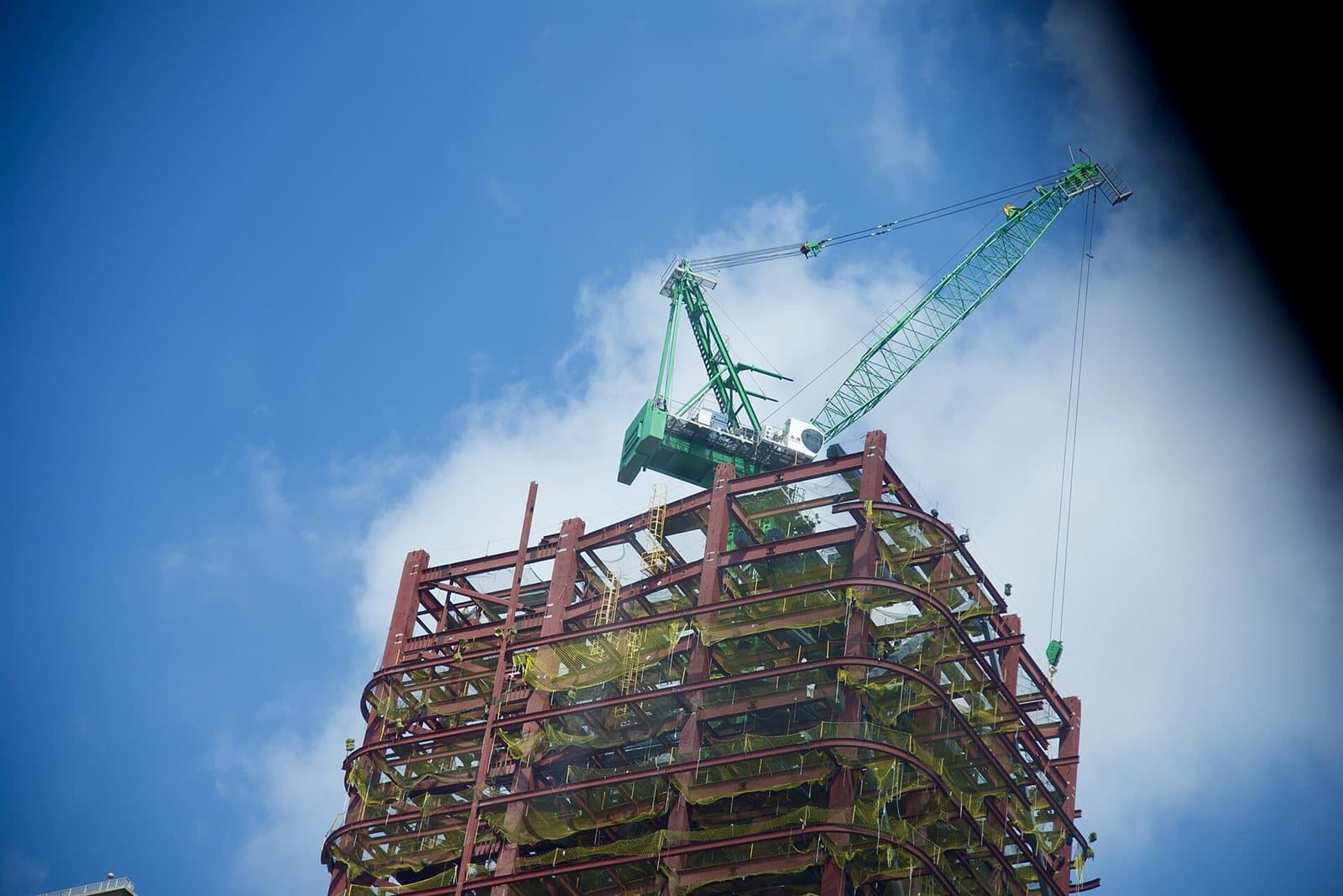
FIG. 01 — STRUCTURAL ENGINEERING
What It Is
Structural engineering deals with the load-bearing framework of buildings and bridges — making sure a structure can safely carry its own weight plus forces like wind, earthquakes, and everyday use. It's typically pursued as a specialization within civil engineering, not its own separate degree.
What Engineers Work On
Structural engineers decide whether something will stand up, and keep standing. They size beams, columns, slabs, foundations, and the connections between them, and model the loads a structure has to survive — its own weight, the people and equipment inside it, wind, snow, and, depending on where it's built, earthquakes. A large share of the work is detailing: drawing the joints and fixings precisely enough that a contractor can build them, and revising when the architecture changes around them.
Real-World Examples
- Load-bearing framework design for buildings
- Bridge structural design and analysis
- Earthquake and wind-resistance engineering
- Structural inspection of existing buildings and bridges
Common Misconceptions
Tap a card to see the reality behind each one.
Myth: Structural engineers design buildings.
Reality: They design the load-bearing skeleton. The shape, layout, and appearance are usually an architect's decisions, which the structure then has to work within.
Myth: The computer does the calculations, so the job is mostly data entry.
Reality: Software will happily return a confident answer to a badly set-up model. Deciding the model and sanity-checking the result is the engineering.
Myth: It's a creative design job.
Reality: There is judgement in it, but it is judgement inside codes and safety factors. Being deliberately conservative is part of doing it correctly.
Myth: You only work on impressive new landmarks.
Reality: Much of the work is ordinary buildings, and a good deal of it is inspecting or reinforcing structures that are already there.
A Day in the Life
Most of the day is analysis and drawing at a computer, punctuated by coordination with architects and other engineers whose systems have to pass through the same structure. Site visits come in bursts, usually at construction milestones or when something on site doesn't match the drawings. Reviewing and checking other people's calculations is a routine part of the work, and so is being checked yourself.
One illustrative example day, not a guaranteed schedule — real days vary a lot by employer, role, and industry.
Model setup
Building an analysis model of a floor — deciding which loads matter and how the supports should be represented.
Building an analysis model of a floor — deciding which loads matter and how the supports should be represented.
Reviewing a colleague's beam calculations, and having your own checked in return.
An architectural change has moved a column; working out everything else that has to change because of it.
Drawing a steel connection precisely enough that a fabricator can make it and a crew can assemble it.
At a construction milestone, checking reinforcement before a concrete pour, or looking at something on site that doesn't match the drawings.
Writing up today's calculations so they can be reviewed and submitted for approval.
Would you be comfortable carrying responsibility for whether a structure stays standing, and having every calculation you make checked?
Typical Projects
- Sizing the frame of a building against gravity, wind, and seismic loads
- Analysing an existing bridge to judge what loads it can still safely carry
- Designing a foundation for the ground conditions actually found on site
- Detailing connections so the structure can be assembled in the right order
- Retrofitting an older building to meet current earthquake or wind requirements
Getting Ready
Useful Subjects
- Physics
- Calculus
- Technical drawing or CAD, if available
- Statistics, if offered
Helpful Skills
- Spatial reasoning, since you need to picture how forces travel through a structure to the ground
- Comfort working inside codes and standards, which set much of what is and isn't allowed
- Precision and care, because a missed load case or a badly detailed connection has real consequences
- Clear communication with architects and contractors, since your drawings have to be built by someone else
- A willingness to be conservative, which in this field is a professional virtue rather than a lack of nerve
Where This Field Shows Up
Industries
- Structural and civil consulting firms
- Construction and design-build contractors
- Government transport and infrastructure agencies
- Building inspection and forensic engineering
- Manufacturers of structural products and systems
Related Majors
- Civil Engineering (with a structural focus)
- Structural Engineering (offered as its own major at some schools)
Career Explorer
Building Structural Engineer
Designs the frames, floors, and foundations of buildings, from houses to high-rises.
Bridge Engineer
Designs new bridges and assesses how much load existing ones can still safely carry.
Forensic Structural Engineer
Investigates why a structure failed or was damaged, and what it would take to repair it.
Seismic Retrofit Engineer
Strengthens existing buildings to meet current earthquake requirements, mainly in regions where earthquakes are a design concern.
Weighing It Up
Advantages
- The work is permanent and public — you can stand in front of it years later
- The purpose is unusually clear, since the job is keeping structures from hurting anyone
- Skills carry across buildings, bridges, and industrial structures without starting over
- Professional licensing gives a defined, recognised path for progressing
Challenges
- The responsibility is real, and mistakes carry consequences that other engineering fields don't have in the same way
- Codes and approvals constrain a lot of what you're permitted to do
- Projects run long, and designs get revised repeatedly as the architecture shifts
- Getting licensed takes years of supervised experience and exams after the degree
Things People Dislike
- Carrying liability for decisions long after the project has finished
- Redoing work because a change upstream moved a wall or a column
- How much time goes into checking, documenting, and defending calculations
- Being the person who has to say no to an idea that would look better than it performs
How Competitive Is It?
The U.S. Bureau of Labor Statistics counts structural engineers within civil engineers, and projects 6% employment growth for civil engineers as a whole from 2025 to 2035 — faster than average — with about 22,700 openings a year. That covers every kind of civil engineer, not structural work specifically, and demand follows how much is being built and renovated, which varies by region and over time. Licensing matters a lot here: in many countries you need years of supervised experience and exams before you can sign off designs on your own, and some places require an additional structural-specific license for certain buildings — research the rules where you'd want to work.
What You Could Earn
Structural engineers are typically tracked under the broader 'civil engineers' category by the U.S. Bureau of Labor Statistics, not as their own separate occupation. See the Civil Engineering page for that sourced salary data.
Try It Yourself
- Build a paper or spaghetti tower and test how much weight it holds before it fails — then change one thing and test again
- Look at a bridge you pass regularly and try to work out how its load gets down to the ground
- Try a free online truss or beam simulator and see how moving a support changes the forces
Questions to Ask Yourself
- Am I comfortable with work where a mistake could actually hurt someone?
- Would I enjoy being careful and conservative more than being bold?
- Am I willing to spend years after my degree getting licensed?
- Do I like the idea of seeing my work built, even if it takes years to get there?
What Can I Do Next?
Grade level: High school
Grade systems vary by country — pick whichever tab is the closest match for where you are.
Not saved anywhere. (just for this visit — nothing is stored beyond your browser tab).
A project to try
Design a small truss bridge in a free simulator, then build it from balsa or popsicle sticks and compare where it actually fails with where the model said it would.
A tool to learn
A free online truss or bridge simulator, plus balsa wood or popsicle sticks.
A club or activity
Look into Science Olympiad, which has structure-building events, or an ACE Mentor Program chapter, if one runs near you.
How to actually find one near you →