Chemical Engineering
Chemistry and physics put to work designing the processes and equipment that turn raw materials into everything from fuel to medicine to plastics.
FIG. 01 — CHEMICAL ENGINEERING
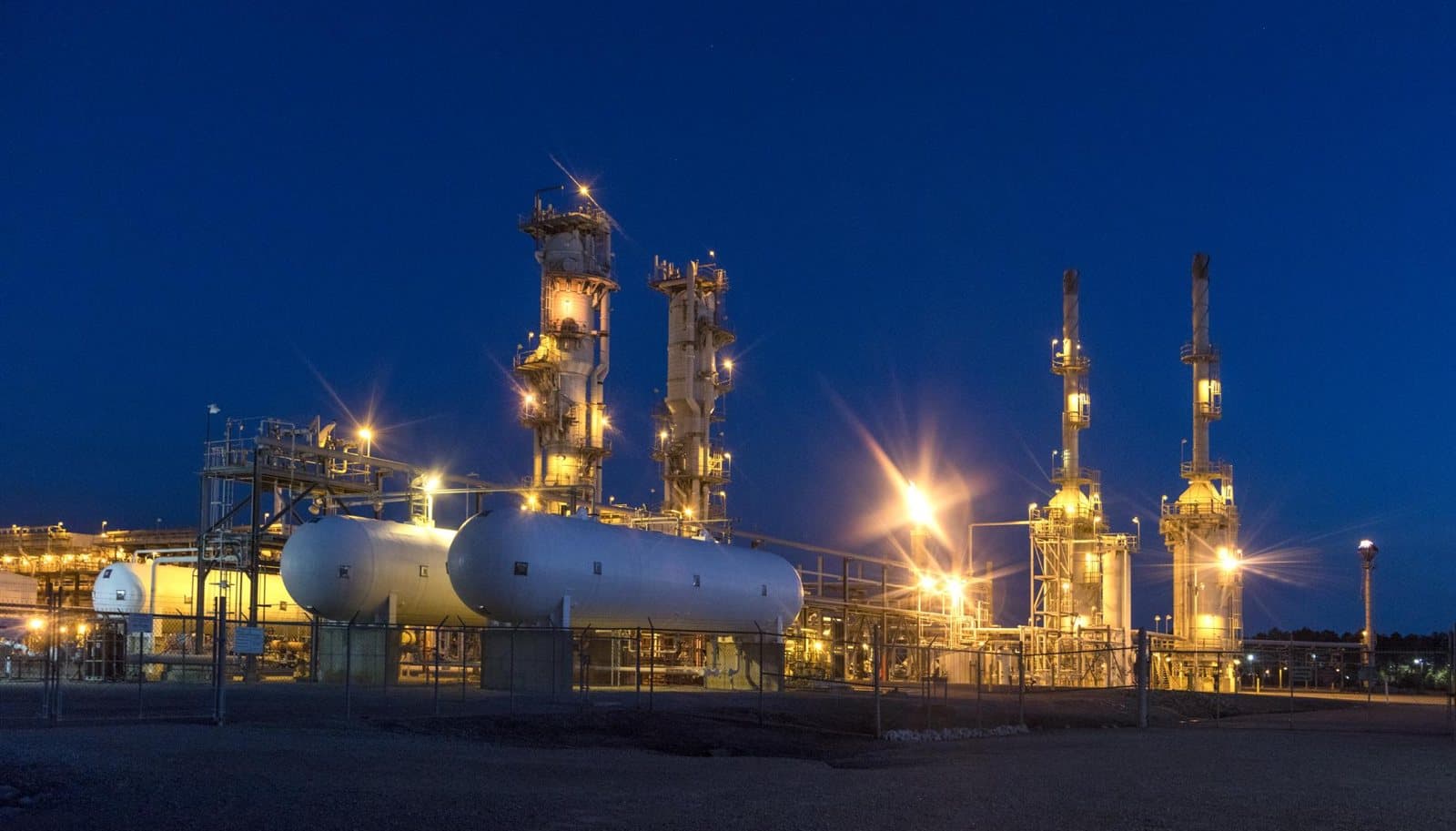
What It Is
Chemical engineering is about designing and running the large-scale processes that turn raw materials into usable products — fuels, plastics, pharmaceuticals, food, and industrial chemicals. It sits at the intersection of chemistry, physics, and traditional engineering, focused less on inventing new chemical reactions and more on figuring out how to run them safely and efficiently at a massive scale.
What Engineers Work On
Chemical engineers design equipment and processes for manufacturing, run experiments and simulations to figure out the most efficient and safe way to produce something, establish safety procedures for handling hazardous materials, and troubleshoot problems when a production process isn't behaving as expected. A lot of the job involves scaling something that works in a small lab up to a process that can run continuously in a full-size industrial plant.
Real-World Examples
- Oil refining and fuel production
- Pharmaceutical manufacturing processes
- Plastics and polymer production
- Water treatment and desalination systems
- Food and beverage processing plants
Common Misconceptions
Tap a card to see the reality behind each one.
Myth: Chemical engineers work mostly in a lab mixing chemicals.
Reality: Most of the job is designing and running large-scale industrial processes, not lab chemistry.
Myth: It's the same as being a chemist.
Reality: Chemists typically focus on discovering and understanding reactions; chemical engineers focus on how to run them safely and efficiently at scale.
Myth: It's a niche field.
Reality: Chemical engineers work across a very wide range of industries, from energy to pharmaceuticals to food production.
A Day in the Life
Expect both office-based process design and simulation work, and time on a plant floor monitoring and troubleshooting active production processes. Safety review and regulatory compliance work is a bigger part of the job than people expect, since many chemical processes involve hazardous materials.
One illustrative example day, not a guaranteed schedule — real days vary a lot by employer, role, and industry.
Plant walkthrough
Checking on an active production process and talking with plant operators about how it's running.
Checking on an active production process and talking with plant operators about how it's running.
Analyzing data from yesterday's production run to check the yield and efficiency.
Reviewing procedures for handling a hazardous material used in the process.
Modeling a proposed change to the process to see if it improves efficiency before trying it for real.
A production line isn't hitting its expected output, and it's not immediately clear why.
Writing up today's findings for the plant's safety and process records.
How would you feel being responsible for the safety procedures around a process that could be genuinely dangerous if something goes wrong?
Typical Projects
- Designing equipment to safely scale up a lab process to industrial production
- Analyzing a production process to find ways to make it more efficient or less wasteful
- Reviewing safety procedures for handling a hazardous material
- Troubleshooting why a production line isn't producing the expected yield
Getting Ready
Useful Subjects
- Chemistry
- Physics
- Calculus
- Biology, if available
Helpful Skills
- A strong foundation in chemistry, since it underlies most of the process design work
- Comfort with safety-critical thinking — many chemical processes involve hazardous materials, high pressure, or high temperature
- Systems thinking — understanding how a change in one part of a process affects everything downstream
- Basic computer literacy for process simulation software
Where This Field Shows Up
Industries
- Oil and gas
- Pharmaceuticals
- Food and beverage
- Plastics and materials manufacturing
- Water treatment
- Consumer products
Related Majors
- Chemical Engineering
- Materials Science and Engineering
- Biochemical Engineering
Career Explorer
Process Engineer
Designs and optimizes the steps of a manufacturing process to be safe, efficient, and consistent.
Process Safety Engineer
Focuses specifically on identifying and reducing hazards in industrial chemical processes.
Plant/Production Engineer
Works on-site at a manufacturing plant, keeping active production processes running smoothly.
Research and Development Engineer
Works on developing new or improved processes, often bridging lab-scale chemistry and industrial-scale engineering.
Weighing It Up
Advantages
- Skills transfer across a very wide range of industries, from energy to pharmaceuticals to food production
- A strong foundation in both chemistry and traditional engineering opens multiple career directions
- Work has a direct connection to products used in everyday life
Challenges
- Heavy chemistry, physics, and math coursework, often considered one of the more academically demanding engineering majors
- Working with hazardous materials means safety has to come before speed or convenience, which can slow work down
- Many roles are tied to specific industries, like oil and gas, that can go through significant boom-and-bust cycles
Things People Dislike
- Heavy safety and regulatory documentation requirements
- Some roles, especially at production plants, may not be located in major cities
- Industries like oil and gas can be economically cyclical, which affects job stability in those specific sectors
How Competitive Is It?
The U.S. Bureau of Labor Statistics projects 5% employment growth for chemical engineers from 2025 to 2035 — faster than the average for all occupations — with about 1,100 openings projected per year over that decade, many resulting from workers retiring or changing careers. That's a smaller number of annual openings than some other engineering fields, since chemical engineering is a comparatively smaller field overall. Demand and pay can vary a lot depending on which industry you're in and its current economic cycle — research the current market in your specific country and industry before making decisions.
What You Could Earn
United States (national median) · May 2025 — U.S. Bureau of Labor Statistics
Last verified: September 2026
This is a U.S. national median across all experience levels and specializations — not a starting salary, and not adjusted for your region. Pay can vary meaningfully depending on which industry you're in, such as oil and gas versus pharmaceuticals.
What actually affects your salary?
The number above is a national median — the middle point across everyone in the field, not a typical starting salary. What you'd actually earn depends on things this page can't predict for you:
- Location — pay for the same job title can differ a lot by country, state, or even city, often tied to local cost of living.
- Years of experience — entry-level pay is usually well below the median, and typically rises over a career.
- Specialization — some sub-areas within a field pay differently (aerospace vs. general manufacturing, or power systems vs. consumer electronics, for example).
- Industry and company — a large company, a startup, and a government job can pay very differently for similar work.
- Education and licensure — an advanced degree or professional license can affect both which roles you're eligible for and what they pay.
- Economic conditions — hiring markets shift over time, so a number that was accurate a few years ago might not be now.
None of this makes the number above wrong — it's a real, sourced figure. It just means a single number can't tell you what you personally would earn.
Try It Yourself
- Try a simple, adult-supervised kitchen chemistry experiment, like making a basic polymer
- Research how a specific everyday product, like plastic or fuel, is manufactured at an industrial scale
- Try a free chemistry simulation tool to see how changing conditions affects a reaction
Questions to Ask Yourself
- Am I comfortable with heavy chemistry and math coursework, on top of traditional engineering topics?
- Would I be okay being responsible for safety procedures around potentially hazardous materials?
- Am I interested in how things are made at a large, industrial scale, not just how they work in theory?
- Would I be okay if my job were located at an industrial plant rather than an office in a major city?
What Can I Do Next?
Grade level: High school
Grade systems vary by country — pick whichever tab is the closest match for where you are.
Not saved anywhere. (just for this visit — nothing is stored beyond your browser tab).
A project to try
Try a free chemistry simulation tool to see how changing conditions like temperature or concentration affects a reaction.
A tool to learn
PhET Interactive Simulations (University of Colorado Boulder) — free, includes chemistry and states-of-matter topics.
A club or activity
Look into a Science Olympiad team, which often has chemistry-related events.
How to actually find one near you →