Manufacturing Engineering
How a design becomes a real, physical product at scale — the processes and equipment behind it.
FIG. 01 — MANUFACTURING ENGINEERING
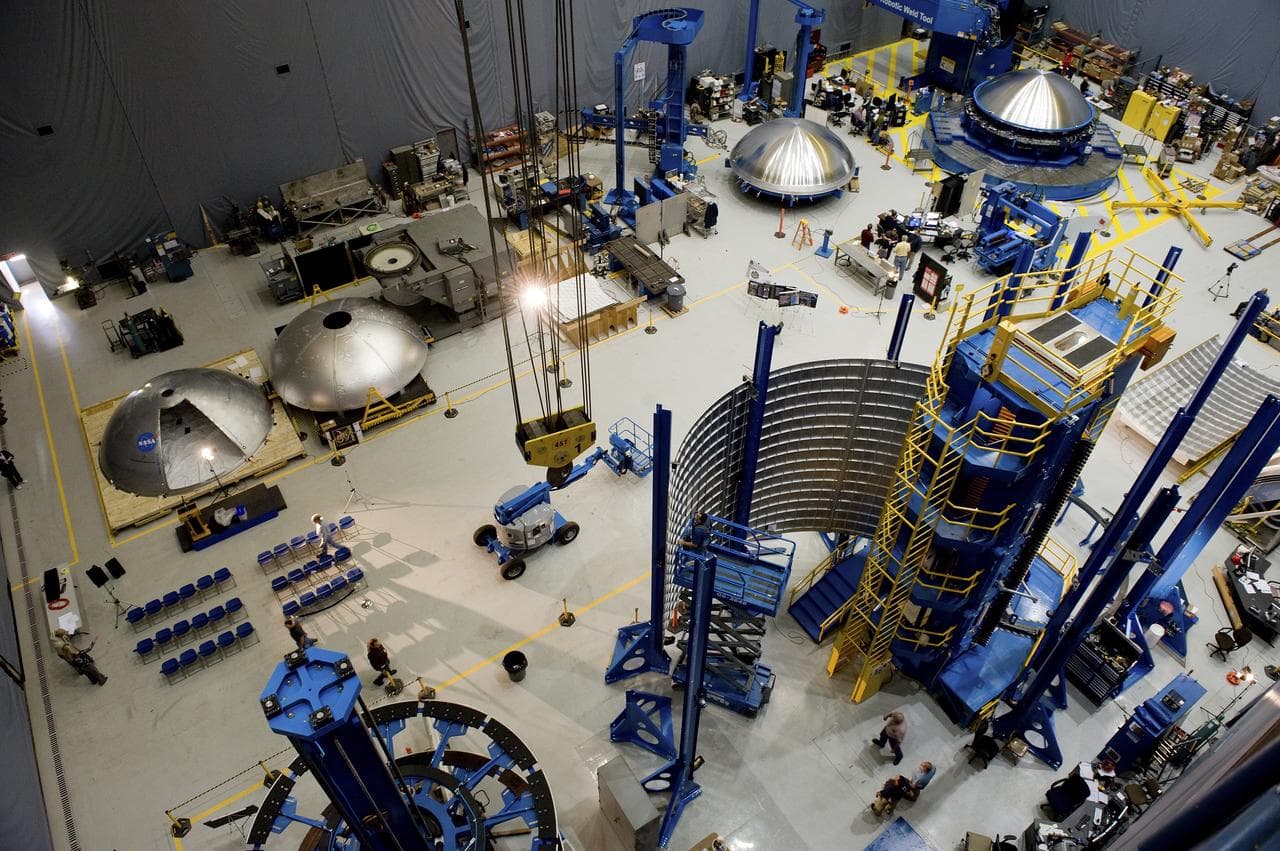
What It Is
Manufacturing engineering is about the processes and equipment used to actually produce things at scale — the machinery, tooling, and workflows that turn a design into a physical product, and making all of it run better. It overlaps closely with both mechanical and industrial engineering.
What Engineers Work On
Manufacturing engineers work on the gap between a design that works once and a design that can be built thousands of times, correctly, at a price someone will pay. They specify machines and tooling, lay out the sequence of operations, design the fixtures that hold a part while it's worked on, and chase down why a process that was fine last month is now producing scrap. Much of the job happens on the factory floor rather than at a desk.
Real-World Examples
- Production line and factory equipment design
- Tooling and fixture design for manufacturing
- Process improvement to reduce waste or defects
- Automation of manufacturing steps
Common Misconceptions
Tap a card to see the reality behind each one.
Myth: Manufacturing engineers design the products being made.
Reality: They design how it gets made. A frequent part of the job is telling a design team that their part is fine on screen and impossible to produce at rate.
Myth: Automation is eliminating the field.
Reality: Automation moves the work rather than removing it. Choosing, integrating, and maintaining automated equipment is manufacturing engineering.
Myth: It's the same as industrial engineering.
Reality: They overlap. Industrial engineering leans toward systems, flow, and efficiency; manufacturing engineering leans toward the physical processes and machinery.
Myth: You sit at a desk.
Reality: You spend a lot of time on the floor, because the problems show up at the machine and not in the drawing.
A Day in the Life
The day moves between the floor and a desk, usually not on your own schedule. Planned work is process design, tooling drawings, and data analysis; unplanned work is whatever has stopped running. Production timing shapes everything — trials and changeovers often happen around shifts, and some commissioning work lands at night or over a shutdown because that's the only time the line is free.
One illustrative example day, not a guaranteed schedule — real days vary a lot by employer, role, and industry.
Shift handover
Hearing from the night shift what ran, what stopped, and what's producing scrap this morning.
Hearing from the night shift what ran, what stopped, and what's producing scrap this morning.
Watching a machine that started making out-of-tolerance parts, and asking the operator what changed.
Pulling the process data and narrowing down which of several possible causes fits what's actually happening.
Back at a desk, drawing a fixture for a new part that's due to go into production.
Showing a product design team which features of their part would be expensive to make, and suggesting alternatives.
Scheduling a process trial around production so it doesn't stop a running line.
Would you enjoy a job where part of every day is reacting to whatever broke, rather than working through a plan you set yourself?
Typical Projects
- Designing a fixture that holds a part accurately while it's machined or welded
- Laying out the sequence of operations for a new product's assembly
- Finding the root cause of a defect that started appearing on an existing line
- Specifying and commissioning a new machine or robot cell
- Reworking a process to cut cycle time, scrap, or changeover time
Getting Ready
Useful Subjects
- Physics
- Calculus
- Statistics, if offered
- Technical drawing or CAD, if available
- Shop, robotics, or hands-on electives if your school has them
Helpful Skills
- Practical mechanical sense, since much of the job is understanding why a machine or a tool behaves the way it does
- Comfort with statistics, because process quality is measured and controlled statistically
- Systematic troubleshooting, since a defect usually has several plausible causes that need eliminating in order
- Working well with machine operators and technicians, who often know the process better than anyone
- Tolerance for interruption, because a line going down outranks whatever you were doing
Where This Field Shows Up
Industries
- Automotive and aerospace manufacturers
- Electronics and consumer goods production
- Medical device and pharmaceutical manufacturing
- Contract manufacturers and component suppliers
- Industrial equipment and automation vendors
Related Majors
- Manufacturing Engineering
- Industrial Engineering (some overlap)
- Mechanical Engineering (some overlap)
Career Explorer
Process Engineer
Owns a set of production steps and keeps them running within quality, cost, and cycle-time targets.
Tooling and Fixture Engineer
Designs the jigs, fixtures, and tooling that hold and shape parts during production.
Automation Engineer
Specifies, integrates, and commissions robots and automated equipment on a production line.
Quality Engineer
Measures and controls process quality, and leads the investigation when defects appear.
Weighing It Up
Advantages
- The feedback is immediate and physical — a change either improves the line or it doesn't
- The work is visible, since you can watch the process you designed running
- Skills apply across almost any industry that makes a physical object
- There's a clear route into operations and plant management for people who want it
Challenges
- Production pressure is constant, and a stopped line is expensive by the minute
- Cost and cycle time constrain solutions as much as physics does
- Shift work, night commissioning, and shutdown work are common
- Factory environments can be loud, hot, and physically demanding
Things People Dislike
- Being pulled off planned work to firefight whatever broke this morning
- Night and weekend work during installations and shutdowns
- Fighting the same recurring defect that has several possible causes
- Having to argue for a design change that would make production far easier
How Competitive Is It?
The U.S. Bureau of Labor Statistics counts manufacturing engineers as a type of industrial engineer, and projects 12% employment growth for industrial engineers from 2025 to 2035 — much faster than average — with about 23,100 openings a year. That figure covers all industrial engineers, not manufacturing roles specifically, so read it as background rather than a forecast for this field. Manufacturing work is tied to where things are actually made, which varies a lot by region and industry, and shift or shutdown work is common in some plants — research the manufacturers and industries near you before making decisions.
What You Could Earn
The U.S. Bureau of Labor Statistics counts manufacturing engineers as a type of industrial engineer rather than a separate occupation, so their pay is included in the industrial engineers figure. See the Industrial Engineering page for that sourced salary data.
Try It Yourself
- Watch a factory-tour video of how something ordinary is made, and write down each step in order
- Pick a simple object and sketch how you would hold it steady to drill a hole in exactly the same place a hundred times
- Time yourself assembling something simple a few different ways and see which order of steps is fastest and least error-prone
Questions to Ask Yourself
- Would I rather improve how something gets made than design the product itself?
- Am I comfortable spending a lot of my time on a loud factory floor instead of at a desk?
- How would I handle being pulled off planned work by urgent problems?
- Would I be okay with occasional night, weekend, or shutdown work?
What Can I Do Next?
Grade level: High school
Grade systems vary by country — pick whichever tab is the closest match for where you are.
Not saved anywhere. (just for this visit — nothing is stored beyond your browser tab).
A project to try
Design a simple jig in a free CAD tool that would hold a part in exactly the same position every time, and think through how you'd make it.
A tool to learn
Tinkercad, or Fusion 360 (free for students and educators).
A club or activity
Take a shop, manufacturing, or robotics class, or join a robotics team, if your school offers one.
How to actually find one near you →