Materials Engineering
Developing and testing the metals, polymers, ceramics, and composites that every other engineering field builds with.
FIG. 01 — MATERIALS ENGINEERING
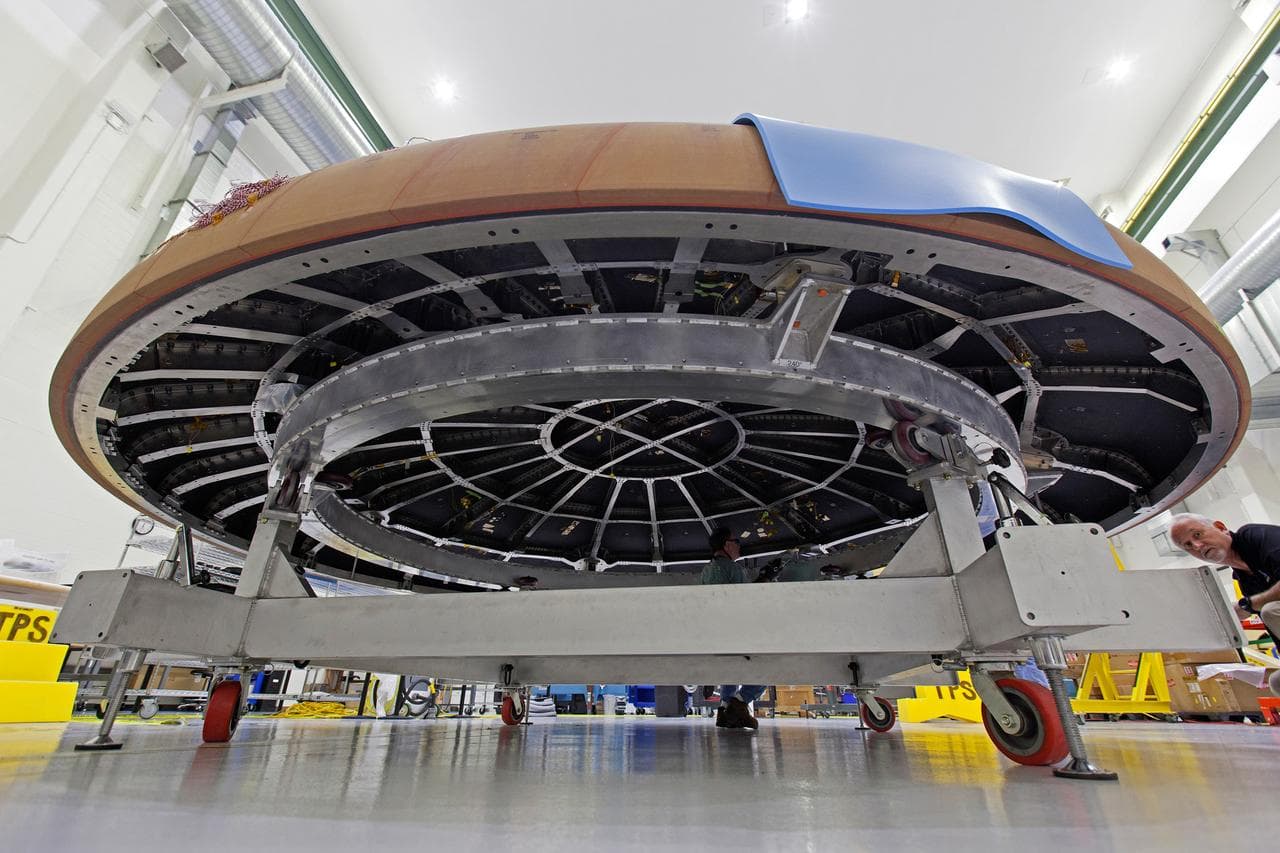
What It Is
Materials engineering is about understanding and developing the substances everything else is made from — metals, plastics, ceramics, composites, and increasingly engineered materials designed for a specific purpose. Rather than designing a finished product, materials engineers often work one level down, figuring out what a material needs to be made of and how it needs to be processed so that it performs the way a mechanical, aerospace, or biomedical engineer needs it to.
What Engineers Work On
Materials engineers develop, process, and test materials used to create a wide range of products. They design procedures for developing new materials, monitor how a material performs over time under stress, heat, or wear, evaluate whether a material meets required quality specifications, and collaborate closely with engineers from other disciplines who need a material with specific properties. A lot of the work is genuinely experimental — testing how a material behaves under conditions it hasn't been tried in before.
Real-World Examples
- Lightweight alloys used in aircraft and vehicles
- Polymers and composites used in sporting equipment or medical devices
- Semiconductor materials used in electronics
- Heat-resistant materials used in engines or industrial equipment
- Biocompatible materials used in implants
Common Misconceptions
Tap a card to see the reality behind each one.
Myth: Materials engineers just pick materials off a shelf for other engineers.
Reality: A significant part of the job is developing and testing genuinely new materials, not just selecting existing ones.
Myth: It's the same as chemistry.
Reality: Chemistry focuses on the reactions and composition of substances; materials engineering focuses more on how a material's structure affects its real-world performance.
Myth: It's a narrow, niche field.
Reality: Materials engineers work across aerospace, automotive, electronics, medical devices, energy, and more.
A Day in the Life
Lab-based testing and experimentation are balanced against collaboration with engineers from other disciplines who need a material with specific properties for their own project. Data analysis and documentation are a significant part of the job, since material performance has to be precisely characterized and recorded.
One illustrative example day, not a guaranteed schedule — real days vary a lot by employer, role, and industry.
Lab testing
Testing how a material sample performs under stress or heat.
Testing how a material sample performs under stress or heat.
Analyzing yesterday's test results to see how the material's performance compares to what was expected.
Talking with a mechanical or aerospace engineer about a material's required properties for their project.
Investigating why a material sample failed or degraded faster than expected.
Recording precise data on a material's composition and performance for the project record.
Planning tomorrow's round of testing based on today's results.
Would you find it satisfying to spend weeks or months testing and refining a single material, rather than working toward one finished, visible product?
Typical Projects
- Testing how a material performs under stress, heat, or repeated wear
- Developing a new material or alloy with specific target properties
- Analyzing why a material failed or degraded faster than expected
- Evaluating whether a material meets a project's quality and safety specifications
Getting Ready
Useful Subjects
- Chemistry
- Physics
- Calculus
- Technical drawing or CAD, if available
Helpful Skills
- A strong foundation in chemistry and physics, since material properties come from what's happening at a molecular or structural level
- Patience for experimentation, since developing or testing a new material often takes many rounds of trial and error
- Attention to detail, since small differences in composition or processing can significantly change how a material performs
- Collaboration skills, since materials engineers usually work in support of another engineering discipline's specific needs
Where This Field Shows Up
Industries
- Aerospace
- Automotive
- Electronics and semiconductors
- Medical devices
- Energy
- Manufacturing
Related Majors
- Materials Science and Engineering
- Metallurgical Engineering
- Chemical Engineering (some overlap)
Career Explorer
Metallurgical Engineer
Focuses specifically on the properties and processing of metals and alloys.
Polymer Engineer
Develops and tests plastics and other polymer-based materials.
Failure Analysis Engineer
Investigates why a material or component failed, to help prevent it from happening again.
Research and Development Engineer
Works on developing entirely new materials with specific target properties.
Weighing It Up
Advantages
- Work sits at the foundation of nearly every other engineering field, since every physical product is made of some material
- Strong, government-tracked job growth — the U.S. Bureau of Labor Statistics projects 8% employment growth from 2025 to 2035, much faster than average
- Deeply experimental and research-oriented, which can be a good fit for people who enjoy genuine scientific investigation
Challenges
- Heavy chemistry and physics coursework, with a strong emphasis on molecular and structural-level thinking
- Development and testing cycles can be slow, since materials often need extensive testing before they're trusted in a real product
- The work can feel one step removed from a finished, visible product, since materials usually end up inside something another engineer designed
Things People Dislike
- Projects can take a long time to go from early testing to real-world use
- A lot of precise documentation and data recording is required
- Some roles are less visible or well-known than other engineering disciplines, which can mean less public recognition for the work
How Competitive Is It?
The U.S. Bureau of Labor Statistics projects 8% employment growth for materials engineers from 2025 to 2035 — much faster than average for all occupations — with about 1,300 openings projected per year over that decade, driven by demand for new materials and manufacturing processes. That's a smaller number of annual openings than some other engineering fields, since materials engineering is a comparatively smaller, more specialized field. Research the current market in your specific country and industry before making decisions.
What You Could Earn
United States (national median) · May 2025 — U.S. Bureau of Labor Statistics
Last verified: September 2026
This is a U.S. national median across all experience levels and specializations — not a starting salary, and not adjusted for your region.
What actually affects your salary?
The number above is a national median — the middle point across everyone in the field, not a typical starting salary. What you'd actually earn depends on things this page can't predict for you:
- Location — pay for the same job title can differ a lot by country, state, or even city, often tied to local cost of living.
- Years of experience — entry-level pay is usually well below the median, and typically rises over a career.
- Specialization — some sub-areas within a field pay differently (aerospace vs. general manufacturing, or power systems vs. consumer electronics, for example).
- Industry and company — a large company, a startup, and a government job can pay very differently for similar work.
- Education and licensure — an advanced degree or professional license can affect both which roles you're eligible for and what they pay.
- Economic conditions — hiring markets shift over time, so a number that was accurate a few years ago might not be now.
None of this makes the number above wrong — it's a real, sourced figure. It just means a single number can't tell you what you personally would earn.
Try It Yourself
- Test how different household materials hold up to being stretched, bent, or compared side by side
- Research how a specific advanced material, like carbon fiber, is used and what makes it special
- Try a simple, safe crystal-growing or polymer science kit
Questions to Ask Yourself
- Would I enjoy working on a material that ends up inside someone else's finished product, rather than a finished product of my own?
- Am I comfortable with heavy chemistry and physics coursework?
- Do I have patience for experimentation that can take many rounds of trial and error?
- Am I genuinely interested in materials specifically, or mainly in the products they end up being used in?
What Can I Do Next?
Grade level: High school
Grade systems vary by country — pick whichever tab is the closest match for where you are.
Not saved anywhere. (just for this visit — nothing is stored beyond your browser tab).
A project to try
Research how a specific advanced material, like carbon fiber or a memory alloy, is used and what makes it special.
A tool to learn
No special tools needed yet — reliable science sources like library books or trusted science sites.
A club or activity
Look into a Science Olympiad team, which sometimes has materials-science-related events.
How to actually find one near you →