Systems Engineering
How all the individual pieces of a large, complex project actually work correctly together.
FIG. 01 — SYSTEMS ENGINEERING
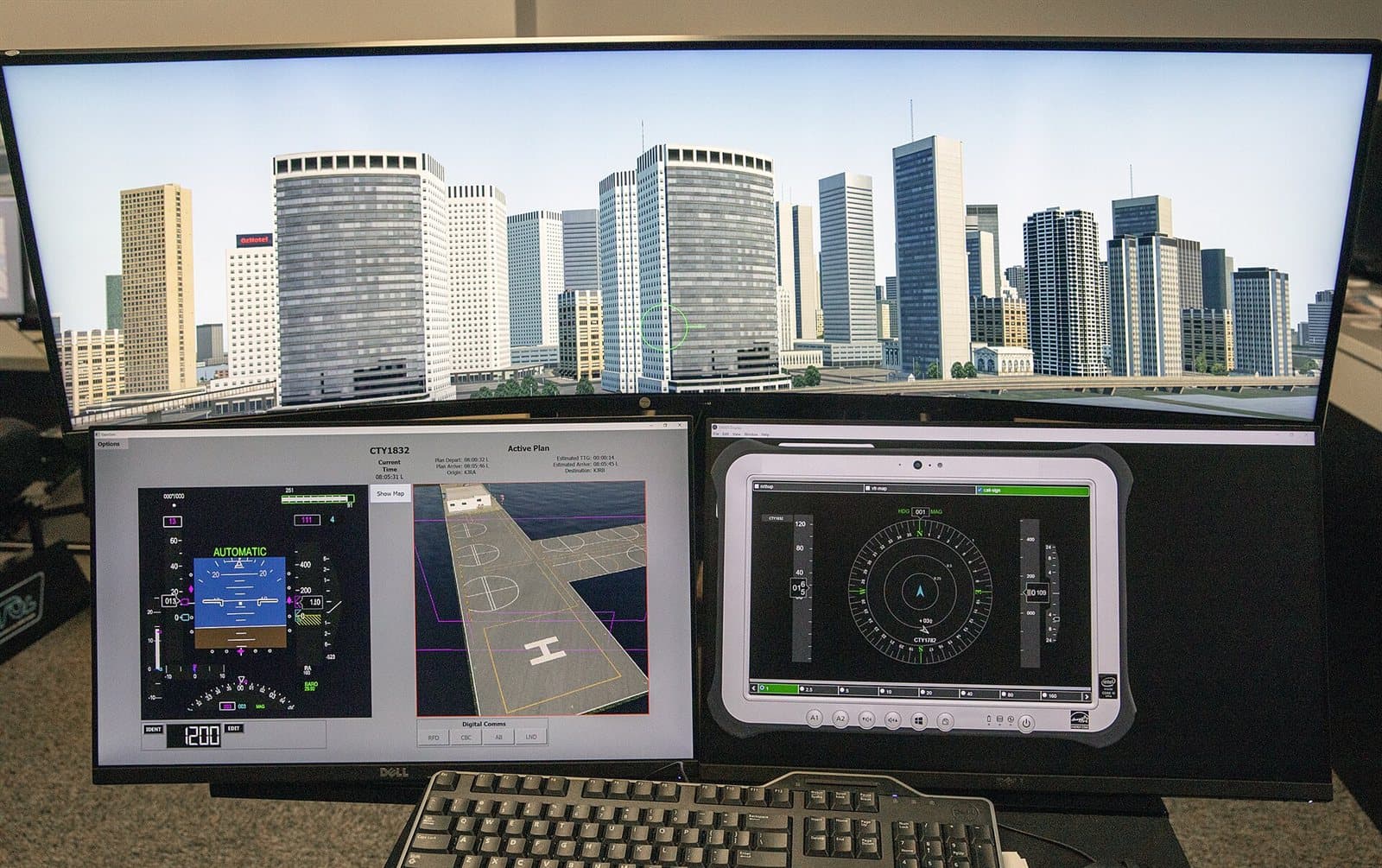
What It Is
Systems engineering zooms out from any single component to look at how a complex system comes together as a whole — making sure every piece of a large project, whether it's an aircraft, a spacecraft, or a major software platform, works correctly with every other piece. It's less about designing a specific part and more about managing how everything connects.
What Engineers Work On
Systems engineers own the seams between parts rather than the parts themselves. They turn a vague goal into requirements specific enough to design against, decide how subsystems will talk to each other, and then verify that the assembled whole actually does what was asked. Much of the work is written — requirements, interface definitions, test plans, and the trade studies that record why one option was chosen over another.
Real-World Examples
- Coordinating how subsystems of an aircraft or spacecraft work together
- Managing requirements and integration for large defense or infrastructure projects
- Overseeing how hardware and software components of a complex product interact
Common Misconceptions
Tap a card to see the reality behind each one.
Myth: Systems engineering is just project management.
Reality: Managers own schedule and cost. Systems engineers own requirements, interfaces, and whether the integrated result actually meets them.
Myth: You have to be an expert in every subsystem.
Reality: You need enough depth to ask good questions of specialists and to notice when two teams are quietly assuming different things.
Myth: It's a senior-only role.
Reality: Plenty of people start in it, though many arrive after some years in a specific discipline, which is where the useful instinct comes from.
Myth: The documents are the point.
Reality: The documents are how agreements between teams are made explicit. When they're skipped, the disagreements surface later during integration, expensively.
A Day in the Life
The day is heavier on meetings and writing than most engineering roles, because the job is largely about keeping separate teams aligned. Reviews are a fixed part of the rhythm, and so is reading other people's designs closely enough to notice what they've assumed. Intensity peaks around integration and test, when everything that was agreed on paper meets everything that was actually built.
One illustrative example day, not a guaranteed schedule — real days vary a lot by employer, role, and industry.
Requirements review
Reading a subsystem's requirements and marking the ones that couldn't actually be tested as written.
Reading a subsystem's requirements and marking the ones that couldn't actually be tested as written.
Getting two teams to agree on exactly what data one subsystem sends the other, and in what format.
Comparing two design options against cost, mass, risk, and schedule, and writing down why one comes out ahead.
Sitting in on another team's review, reading closely enough to spot an assumption that conflicts with a neighboring subsystem.
Working out how the integrated system will be verified, and which requirements each test will prove.
Recording today's decisions so both teams are building to the same agreement.
Would you find it satisfying to be the person who makes sure everything fits together, even if you never design one of the parts yourself?
Typical Projects
- Turning a customer's goal into a testable set of requirements
- Defining the interface between two subsystems being built by different teams
- Running a trade study comparing options against cost, mass, risk, and schedule
- Planning how the integrated system will be verified and tested
- Tracing a failure found during integration back to the requirement or interface that allowed it
Getting Ready
Useful Subjects
- Physics
- Calculus
- Computer science or programming, if offered
- Statistics, if offered
- Any subject that involves structured writing
Helpful Skills
- Precise writing, because an ambiguous requirement will be built two different ways by two different teams
- Comfort holding a whole system in your head without needing to own every detail
- Asking uncomfortable questions early, since integration problems are cheapest to find before anything is built
- Negotiating between teams whose reasonable local decisions conflict with each other
- Patience with process, which on large projects is what keeps a system coherent
Where This Field Shows Up
Industries
- Aerospace and spacecraft programmes
- Defence and large government projects
- Automotive, especially for vehicle-level software and electronics
- Medical devices and other regulated products
- Large-scale infrastructure and transport systems
Related Majors
- Systems Engineering
- Often pursued as a specialization within Aerospace, Industrial, or Electrical Engineering
Career Explorer
Requirements Engineer
Turns customer and stakeholder needs into clear, testable requirements, and keeps them traceable as the design changes.
Systems Architect
Decides how a system is broken into subsystems and how those pieces connect.
Integration and Test Engineer
Brings subsystems together and runs the tests that show the whole system does what it should.
Verification and Validation Engineer
Plans how each requirement will be proven — by test, analysis, or inspection — and tracks the evidence.
Weighing It Up
Advantages
- You see the whole system rather than one component, which suits people who like the big picture
- The skills transfer well between industries, since the discipline is largely the same
- Work sits close to the decisions that shape a project early on
- It's a natural route toward technical leadership without leaving engineering for management
Challenges
- A large share of the job is writing and meetings, which is not what many people picture
- You are often accountable for outcomes you don't directly control
- Programmes are long, and formal process can feel heavy day to day
- It's harder to point at one thing and say you built it
Things People Dislike
- The volume of documentation and review that large projects require
- Being between teams that disagree, repeatedly
- Long gaps between defining something and seeing whether it worked
- Getting blamed at integration for gaps that were flagged and not funded
How Competitive Is It?
The U.S. Bureau of Labor Statistics doesn't publish a separate job-outlook projection for systems engineering — most systems engineers are counted under the discipline they trained in, such as aerospace, electrical, or industrial engineering, so there's no government growth figure specific to this role. (BLS does track "computer systems engineers," but that's an IT role, not this one.) Much of the work sits in aerospace, defense, and other large programs, which depend on budgets and contracts that vary by country. Many people move into systems engineering after some years in a specific discipline, so check what entry-level routes exist where you'd want to work.
What You Could Earn
Like several fields on this page, systems engineering isn't tracked as its own separate category by the U.S. Bureau of Labor Statistics — it's usually pursued as a specialization within another engineering discipline. See the Aerospace or Industrial Engineering pages for related, sourced salary data.
Try It Yourself
- Pick something you own, like a bike or a game console, and draw a diagram of its main parts and what passes between them
- Write a set of requirements for something simple, like a backpack, then swap with a friend and see whether they'd build the same thing from your list
- Plan a group project or event by listing who depends on whom, and notice where things could fall through the gaps
Questions to Ask Yourself
- Would I be satisfied making a whole system work, even if I can't point to one part and say I built it?
- Am I comfortable with a job that's heavy on writing, meetings, and reviews?
- Do I like understanding a little about many areas rather than a lot about one?
- Can I handle being responsible for outcomes that depend on other people's work?
What Can I Do Next?
Grade level: High school
Grade systems vary by country — pick whichever tab is the closest match for where you are.
Not saved anywhere. (just for this visit — nothing is stored beyond your browser tab).
A project to try
On a team project, write down what each person will hand to someone else before anyone starts building, then check those handoffs at the end.
A tool to learn
A free diagramming tool like diagrams.net (draw.io).
A club or activity
Look into a FIRST Robotics, VEX, or Science Olympiad team, where fitting everyone's work together is the hard part, if your school has one.
How to actually find one near you →